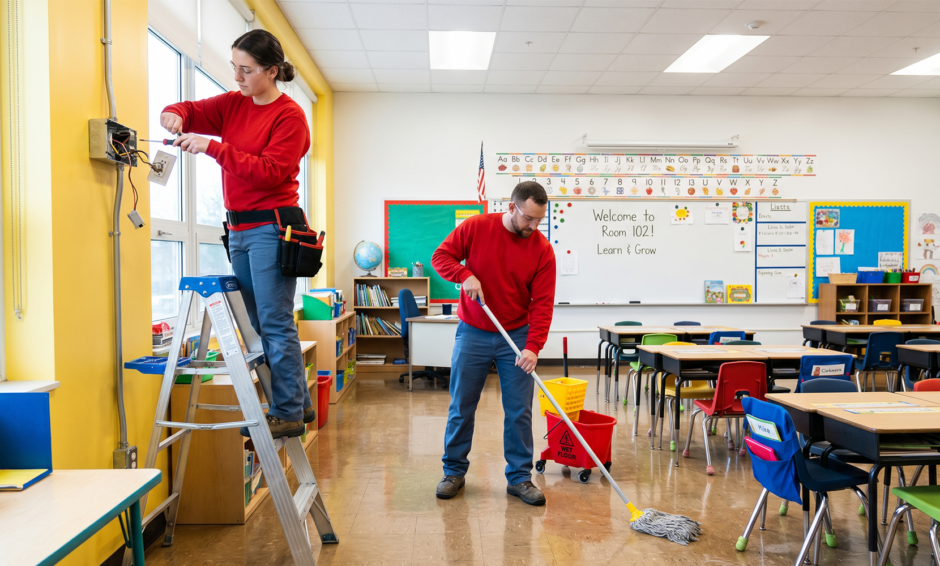
How to Prevent Last-Minute Rework During School Summer Maintenance

Summer break never feels as long as it looks on the calendar. By mid-July, most K-12 schools, private schools, colleges, and universities already have maintenance work underway, even if every building isn’t on the same schedule.

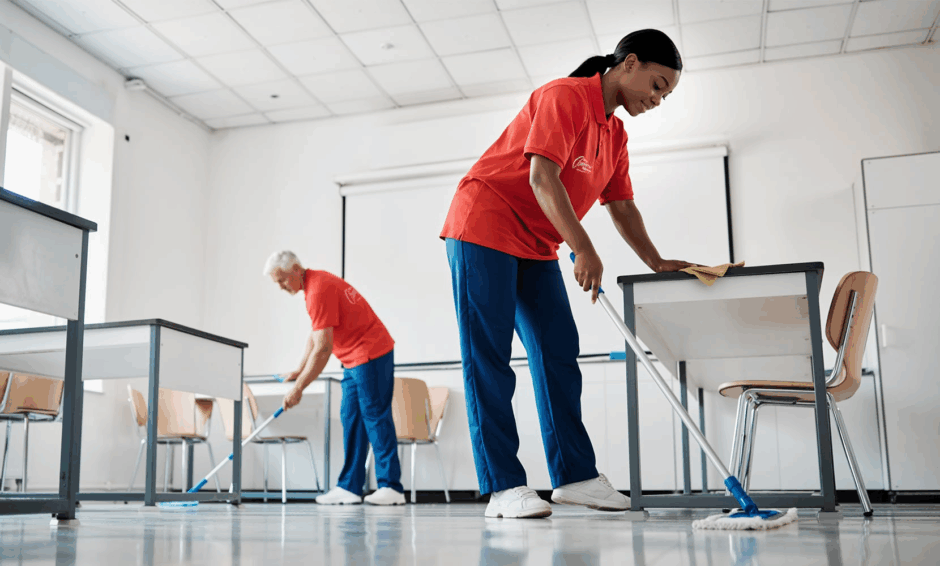
Floors are being restored, classrooms are being refreshed, and outside trades are working alongside school maintenance staff to keep projects moving.

Managing the work itself is only part of the job. Every project affects the spaces around it. A freshly finished hallway becomes the path for moving furniture. Dust from ceiling work settles in classrooms that were cleaned the week before. A room that’s ready for reopening suddenly needs one more visit from an installer.

None of this necessarily points to poor planning. Summer school maintenance has dozens of moving parts, and schedules change. The closer schools get to reopening, the more valuable coordination becomes.

Professional education facility and school cleaning services can help maintenance teams protect completed work, reduce unnecessary rework, and prepare buildings for students, faculty, and staff without piling on more pressure during the final weeks of summer.

Read more “How to Prevent Last-Minute Rework During School Summer Maintenance”
The Summer Facility Readiness Plan: 7 Cleaning Priorities Before Students Return

Summer goes by quickly. One minute students are packing up for break, and the next, orientation tours are underway and teachers are setting up classrooms.

For facility managers, maintenance teams, and administrators, those summer months aren’t truly downtime. They’re one of the few opportunities to get ahead of issues that build up throughout the school year.

But many campuses spend summer tackling only the most visible cleaning tasks. Floors get mopped, trash gets removed, and classrooms get straightened up. Meanwhile, bigger maintenance and cleaning projects pile up.

Deferred cleaning starts showing up in the form of worn flooring, stained carpets, unpleasant odors, indoor air quality concerns, and complaints from students, staff, and visitors.

And that’s particularly important as educational facilities continue to age. According to NCES, the average public school’s main instructional building is 49 years old, with 38% constructed before 1970.1

What could have been addressed through preventative maintenance turns into a much larger expense later.

A proactive summer plan for your K-12 school, community college, university, or multi-building campus can help protect your facility, support healthier learning environments, and reduce long-term maintenance costs.

Avoid playing catch-up all year long. These are the seven cleaning priorities that deserve a spot on your summer educational facility cleaning plan.

Read more “The Summer Facility Readiness Plan: 7 Cleaning Priorities Before Students Return”

Post-Winter Illness Prevention: How Schools Can Strengthen Cleaning Protocols Before Spring

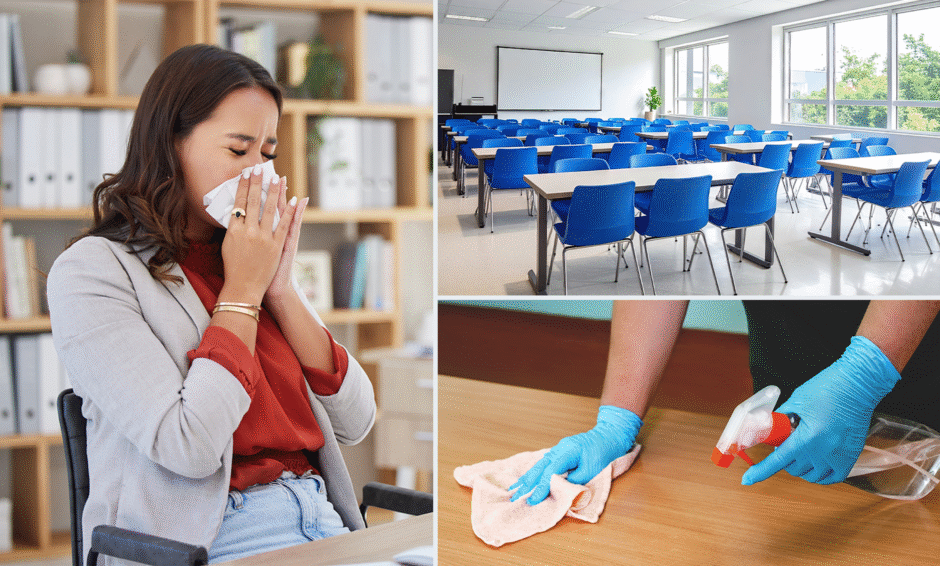
March is here, and most K–12 schools and university campuses have already weathered the toughest stretch of the academic year. Winter illnesses have cycled through classrooms and residence halls, foot traffic has steadily worn down floors and entryways, and custodial teams and school janitorial services staff may have faced gaps due to absences. At the same time, the first signs of spring begin to appear. Fluctuating temperatures, increased moisture, and early allergens entering buildings through every open door.

For facility managers and operations leaders, March isn’t simply a bridge between seasons but a whole operational shift. It’s the time to size up what the winter months left behind, reinforce cleaning and disinfection standards, and prepare buildings for the increased activity and environmental changes that come with spring. A proactive reset now protects health, preserves building assets, and reinforces confidence among students, faculty, parents, and stakeholders.

Strengthen school cleaning protocols this month by reassessing winter wear, reinforcing health standards, and preparing facilities for spring allergens, moisture, and activity.

Read more “Post-Winter Illness Prevention: How Schools Can Strengthen Cleaning Protocols Before Spring”

Small Window, Big Impact: Strategic Winter Break Cleaning for Schools

When it comes to school facility maintenance, winter break often feels like a missed opportunity. With students and staff off campus for only a brief period, many facility managers fall into a familiar trap: trying to do too much in too little time, or defaulting to the same surface-level checklist.

But with the right strategy, even a short break can become a high-value window for long-term impact. At Commercial Cleaning Corporation, we help schools optimize winter break cleaning not just to check a box, but to improve outcomes across cleanliness, safety, perception, and operations.

Here’s how to make your winter school cleaning program support measurable results for your facilities team and your academic community.

Read more “Small Window, Big Impact: Strategic Winter Break Cleaning for Schools”

Ultimate Guide to School Cleaning

Ultimate guide to school cleaning and reopening updated for 2023

It’s hard to believe school is almost here and with the new year comes new challenges and even the addition of a new viral threat. Commercial Cleaning Corp has put together a school cleaning guide packed with tips to help you prepare for a safe and healthy 2023-2024 school year.

Proper Ventilation Keeping School Air Clean

kids in a classroom getting instruction

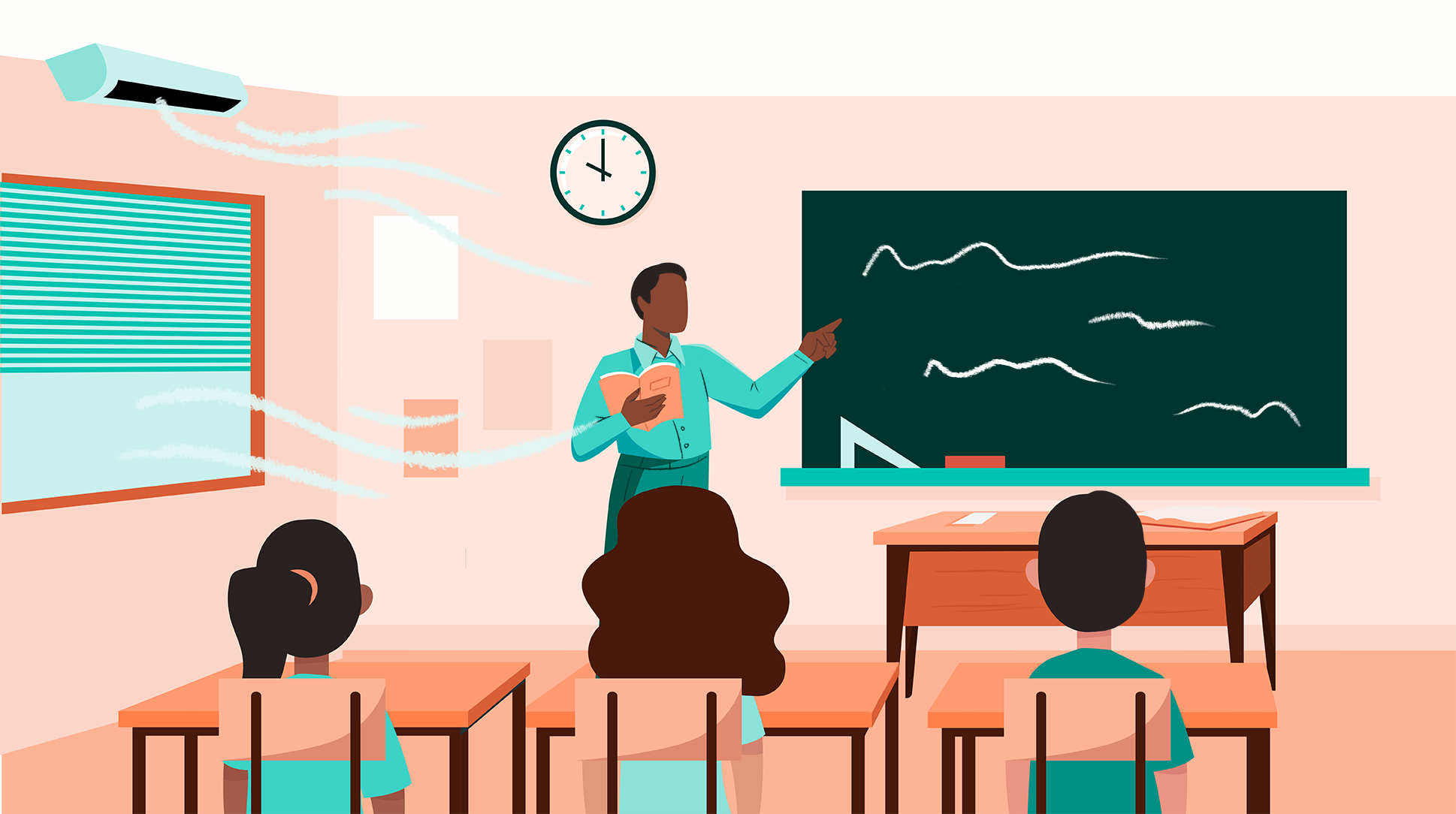
CDC has recommended that proper ventilation be a primary topic of discussion in the reopening of schools this fall. Given the airborne nature of Covid19 recent research is saying that by rotating the air in the classroom this fall you can significantly lower your risk of spreading covid19. In addition to the reduced risk of spreading disease there are studies that show a lower co2 level in the classroom enhances learning.

The official CDC recommendation is to completely change the air in a classroom 6 times per hour. This is referred to as ACH or air changes per hour. When you see a recommendation of 6 ACH you can understand they are saying your ventilation system will replace the air in the room 6 times per hour.

In order to address the ventilation topic, the CDC website has added several features for schools to test and optimize their ventilation. However, you may want to call in your HVAC manager for this part as the concepts can get very technical. We tried to break it down in simple terms to easily understand in our school cleaning guide. If you would like to go down the technical road here are a few links to follow.
Read more “Ultimate Guide to School Cleaning”

The Essential Classroom Cleaning Checklist

Get the NEW 2023 “Ultimate Academic Summer Cleaning Checklist” > 

Updated for 2023 we have added a classroom cleaning checklist in downloadable pdf form. You can also check out our ultimate school cleaning guide that has valuable disinfectant information for schools.  Classrooms are the epicenter of learning; the place where young minds are molded into the great thinkers of tomorrow. They are also one of the most dirt-ridden places, harboring an unimaginably high concentration of germs, grime and viruses due to the high level of human traffic and shared space. With student’s hands averaging 1,200 aerobic bacteria per square inch1, it’s no surprise that classrooms are in constant need of deep-cleaning. Luckily, there are periodic cleaning activities that students, staff and teachers can perform to keep the never-ending tide of germs and grime to a minimum.

Follow this classroom cleaning checklist to cut down the amount of harmful bacteria and dirt in your school’s learning spaces to ensure a healthy experience for students and teachers alike. If you’re still having trouble keeping your classroom clean, it may be time to contact a commercial cleaning company for their services. 

Read more “The Essential Classroom Cleaning Checklist”