
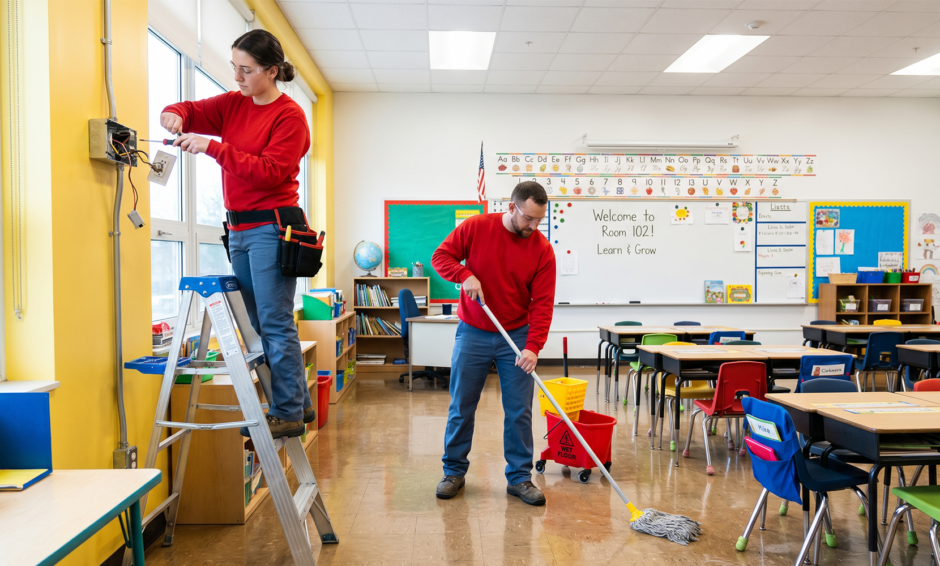
Summer break never feels as long as it looks on the calendar. By mid-July, most K-12 schools, private schools, colleges, and universities already have maintenance work underway, even if every building isn’t on the same schedule.
Floors are being restored, classrooms are being refreshed, and outside trades are working alongside school maintenance staff to keep projects moving.
Managing the work itself is only part of the job. Every project affects the spaces around it. A freshly finished hallway becomes the path for moving furniture. Dust from ceiling work settles in classrooms that were cleaned the week before. A room that’s ready for reopening suddenly needs one more visit from an installer.
None of this necessarily points to poor planning. Summer school maintenance has dozens of moving parts, and schedules change. The closer schools get to reopening, the more valuable coordination becomes.
Professional education facility and school cleaning services can help maintenance teams protect completed work, reduce unnecessary rework, and prepare buildings for students, faculty, and staff without piling on more pressure during the final weeks of summer.
July Is a Good Time to Revisit the Schedule
Even with careful planning, your summer maintenance projects might not unfold exactly as you wanted them to.
A delivery arrives later than anticipated. An HVAC repair takes longer than planned. One building finishes ahead of schedule while another falls behind. Those changes don’t have to derail the rest of the maintenance season, but they should prompt you to look at the schedule one more time.
Mid-summer, ask your maintenance team a few questions to get back on track:
- Which areas are truly finished?
- Which projects still require regular contractor access?
- Which spaces can be cleaned now without creating more work later?
- Has the order of any remaining projects changed?
Reviewing the schedule now can help prevent maintenance staff and custodial teams from wasting time repeating work during the last few weeks before reopening.
Facility teams are balancing limited time, changing schedules, and long lists of work that can’t be completed while students are on campus. The nation’s public schools face an estimated $85 billion annual funding gap for building and grounds maintenance and capital investment.1 So, making the most of every summer work window becomes even more important when maintenance needs are still outpacing available resources.
Not Every Building Should Follow the Same Timeline
One mistake schools sometimes make is assuming the entire campus has to move through maintenance at the same pace.
Different spaces have their own priorities. A residence hall may be ready weeks before an academic building. Administrative offices might finish before science labs. An elementary school library could be complete while the gymnasium is still waiting for equipment repairs and more involved updates.
Treating every building like it’s on the same timeline can leave completed areas sitting untouched while maintenance moves ahead elsewhere.
Try dividing projects into manageable zones. As one section of campus wraps up, it can move into detailed cleaning and let maintenance continue in another part of the property. This will keep work progressing without waiting for every project to finish before the next phase begins.
Protect Work That’s Already Finished
A completed project shouldn’t create extra work for the next one. This is especially true when it comes to floors, freshly painted walls, and spaces that have already been deep-cleaned.
It’s easy for maintenance activity to spill into finished areas. Equipment could get rolled through newly restored hallways. Someone might temporarily store supplies in classrooms that have already been cleaned and prepared for teachers. Packaging materials and construction debris could find their way into common areas that were cleaned days earlier.
Some of that is unavoidable, but small adjustments can help reduce unnecessary cleanup.
Limit traffic through completed areas, identify alternate storage locations, and communicate which rooms are considered finished to your maintenance staff so you can help preserve the work that’s already been done.
The less rework maintenance teams create for themselves, the more time they’ll have to focus on the projects that still need attention.
Don’t Let Small Projects Leave a Big Cleanup Behind
Large renovations naturally receive the most attention, but smaller projects can have a surprisingly big impact on nearby spaces.
Replacing lighting, upgrading classroom technology, repairing ceilings, installing security equipment, or completing electrical work might leave behind fine dust, packaging materials, fingerprints, or debris that spreads beyond the immediate work area.
Even projects completed in just one classroom can impact hallways, nearby offices, restrooms, and entrances used by maintenance crews throughout the day.
Don’t wait until every contractor has left campus. Schedule cleaning in phases to keep dust and debris from accumulating throughout your building. Then stay on top of these potential problems as projects wrap up so final cleaning is more manageable before reopening.
Keep Cleaning Moving with the Maintenance Schedule
Don’t forget that cleaning doesn’t have to wait until every single summer project is checked off the list. Treating cleaning as the very last step can actually just create unnecessary pressure if a bunch of projects finish around the same time.
Instead, aim to match cleaning schedules to maintenance progress. For example, one building may be ready for detailed cleaning but another is still receiving new classroom furniture. Let it happen. Cleaning spaces as they become available means maintenance teams are more able to spread the workload across several weeks instead of compressing everything into the final stretch of summer.
Then facility managers can also identify any outstanding issues before staff start returning to campus.
Walk the Campus with Fresh Eyes
After spending weeks coordinating maintenance work, it’s easy to overlook the details that someone visiting campus for the first time would notice right away.
Before reopening, facility managers should walk the campus without thinking about project schedules or contractor punch lists.
View your buildings through the eyes of teachers, parents, students, visitors, and prospective families. Pay attention to small things like:
- Glass at main entrances and vestibules
- Reception desks and administrative offices
- Hallways and stairwells
- Cafeterias and dining areas
- Restroom appearances
- Gymnasiums and auditoriums
- Dust on vents, ledges, and other high surfaces
- Scuff marks left by equipment or furniture moves
None of these items are major maintenance projects, but they might add up and influence how clean and well cared for a facility feels on the first day people return.
Don’t Underestimate Good Communication
Maintenance departments coordinate with many different people during the summer.
Outside trades, technology vendors, furniture installers, administrators, custodial staff, and delivery teams all have their own schedules and responsibilities. Keep those groups informed about changing timelines to avoid unnecessary interruptions. Quick updates can truly make a difference.
If a wing of the building is officially complete, everyone should know that it isn’t the place to store equipment. If floor restoration has finished in a hallway, crews should know whether another route is available. If classrooms are ready for a final cleaning pass, maintenance staff can avoid scheduling additional work there unless it’s absolutely necessary.
Regular communication helps completed work stay completed.
Hiring Professional Cleaning Services During the Final Stretch
School custodians know their buildings better than anyone. They’re responsible for keeping facilities clean throughout the school year and supporting maintenance work all summer long.
But the final weeks before reopening can certainly place more demands on those teams.
Detailed floor care, high dusting, cleaning after maintenance projects, and preparing multiple buildings for staff and students all compete for the same limited time.
Professional education facility and school cleaning services give you extra personnel, specialized equipment, and flexible scheduling to fit around all this maintenance work. That support lets internal janitorial staff to stay focused on their daily responsibilities.
Whether a school district manages several campuses or a university oversees dozens of buildings, having an experienced cleaning partner can reduces last-minute rework and preps facilities for a smooth return.
At Commercial Cleaning Corporation, we work with K-12 schools, private schools, colleges, and universities throughout the year, including the busiest weeks of summer school maintenance.
Our team coordinates with facility managers and maintenance departments to provide professional cleaning services that fit around ongoing projects, helping schools reopen with clean, well-prepared buildings.
Contact us for more information or a facility walkthrough to see where your team could use the extra help before the new school year starts.
Frequently Asked Questions
How late in the summer can a school hire a commercial cleaning company?
Even if your maintenance schedule has changed, it’s not necessarily too late to bring in outside help. Many schools add professional cleaning support in July or early August as individual buildings or projects wrap up. The sooner you coordinate schedules, the easier it is to clean completed areas before staff and students return.
What areas of a school are commonly overlooked before reopening?
After weeks of maintenance work, it’s easy to focus on major projects and miss smaller details. Main entrances, administrative offices, interior glass, restrooms, high dusting, vents, stairwells, cafeterias, and gymnasiums are some of the last areas facility managers should inspect before reopening. These are also some of the first spaces students, families, and visitors notice.
Can education facility and school cleaning services work around contractors?
Yes. Many schools schedule cleaning in phases as different buildings or sections of campus become available. A professional cleaning partner can work around flooring crews, painters, furniture installers, and other trades, helping maintenance teams prepare completed areas without waiting for every project on campus to finish.
How can schools reduce rework during school maintenance projects?
Reducing rework really starts with communication and sequencing. Find which areas are complete before scheduling detailed cleaning, limit foot traffic through finished spaces, and keep maintenance staff, contractors, and cleaning crews updated as schedules change. Small adjustments throughout July can help avoid repeating work during the final push before reopening.
Sources:
1. State of Our Schools 2025, National Center on School Infrastructure