The building may look spotless on the first day of school, but that doesn’t mean the cleaning plan is ready for the way students and staff will actually use it.
Once buses arrive, athletic programs restart, and hallways fill between periods, the campus changes quickly. Entry doors get touched hundreds of times, restroom supplies disappear faster than expected, and cafeteria turnover compresses the cleaning window. A classroom that seemed like a low priority in August may become one of the busiest spaces in September.
That’s why back-to-school cleaning shouldn’t end with a pre-opening deep clean. The first 30 days are a chance to test the plan under real conditions, adjust cleaning frequencies, and catch gaps before they turn into complaints or contribute to germ spread.
For facility managers overseeing in-house crews or coordinating janitorial services for schools, the goal isn’t to disinfect every surface all day long. It’s about putting the right work in the right places at the right times and making sure it’s done correctly.
Why the First Month Deserves Its Own School Facility Cleaning Plan
A summer reset and an occupied-building cleaning program solve different problems. Summer work focuses on restoration: floors, carpets, high dusting, kitchens, restrooms, and areas that are difficult to access during the school year. Once the building reopens, the priority shifts to controlling daily soil, supporting hygiene, and responding to actual traffic patterns.
The CDC notes that infections can spread in schools through close contact, shared objects, inconsistent cleaning routines, and poor ventilation. Its guidance calls for routine cleaning and sanitizing of frequently touched surfaces such as desks, doorknobs, keyboards, faucet handles, phones, and hands-on learning materials.¹
A first-month plan turns that broad guidance into a schedule your team can realistically execute. It also gives you a defined point to review what’s working instead of waiting until illness complaints, odor issues, empty dispensers, or visible soil force a reaction.
Week 1: Map Contact & Traffic Across the Building
Most cleaning scopes are organized by room type: classrooms, restrooms, offices, cafeterias, and common areas. That’s useful for assigning work, but it doesn’t show how germs and soil move through the building.
During the first week, walk the campus at arrival, lunch, class changes, dismissal, and after-school activities. Look for contact points and traffic surges that a static floor plan misses. The main entrance may be quiet after 8:30 a.m., while a side door near the athletic fields stays active into the evening. A hallway restroom may serve several grade levels, while another sees light use. Shared technology carts, library checkout stations, elevator controls, water bottle fillers, and locker-room touchpoints can be easy to overlook because they don’t belong to one classroom.
This walkthrough can also help facility managers confirm whether the current school facility cleaning scope reflects how the building is actually being used.
Use what you observe to divide the campus into three practical service levels:
- High-contact zones: Spaces and objects that need attention during the occupied day, such as restroom fixtures, cafeteria touchpoints, shared devices, entry hardware, and nurse or wellness areas.
- High-traffic zones: Areas where soil and litter build quickly, including vestibules, main corridors, stairwells, dining areas, and student centers.
- Routine zones: Lower-contact offices, storage areas, and spaces that can remain on the standard evening schedule unless their use changes.
This approach keeps your team from giving every square foot the same level of attention. It also makes labor decisions easier to explain when staffing or budgets are tight.
Week 2: Adjust Frequencies Around the School Day
“Clean daily” can mean almost anything. A surface cleaned at 6 a.m. may go through a full day of use before anyone touches it again. On the other hand, repeatedly disinfecting a low-contact surface can consume time and product without solving a meaningful problem.
Build service windows around when spaces turn over. Restrooms may need checks after arrival, lunch, and dismissal. Cafeteria tables need a reset between meal periods, not simply at the end of the day. Early-childhood rooms and shared learning spaces may require more frequent attention than administrative offices. Athletic facilities need schedules tied to practices, games, and weekend events—not the classroom calendar.
The useful question isn’t, “How often do we clean the school?” It’s, “When does each area need to be ready for its next group of users?” That shift makes school facility cleaning more responsive without automatically adding labor everywhere.
Week 3: Verify the Method Behind the Completed Box
A signed cleaning log confirms that someone visited the area. It doesn’t confirm that the product was mixed correctly, applied to the right surface, or left wet long enough to work.
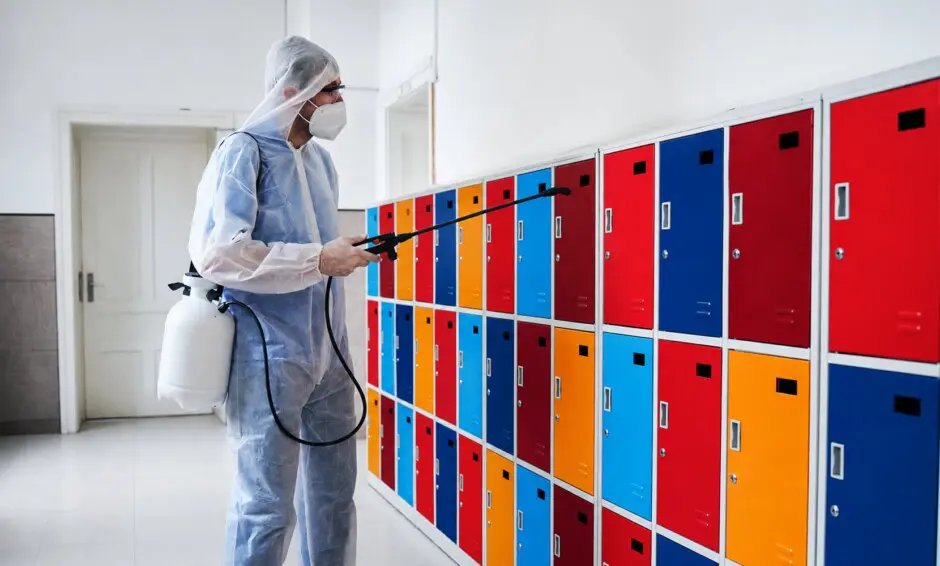
Contact time is one of the easiest details to lose during a busy shift. The EPA explains that a disinfectant must remain visibly wet for the full contact time listed on its label. If a product requires several minutes but dries sooner, it may need to be reapplied. The label also identifies where the product can be used and which organisms it has been reviewed to address.²
During week three, spot-check a few tasks on each shift. Watch the process from start to finish. Is visible soil removed before disinfecting? Are staff using the correct dilution? Are wipes still wet enough to cover the full surface? Are products compatible with desks, screens, flooring, and other materials? Are teams changing cloths and tools often enough to avoid carrying soil from one area to another?
This isn’t about catching employees doing something wrong. It’s a short coaching loop that helps the written scope match what’s happening in the building.
Week 4: Review the Signals Your Building Is Already Giving You
You don’t need a complicated dashboard to find cleaning gaps. A handful of signals can tell you where the plan needs work:
- Restroom supply usage and the times dispensers run empty
- Repeat complaints by location, shift, or time of day
- Areas where visible soil returns soon after service
- Unplanned callbacks or tasks that regularly spill into overtime
- Rooms with changing schedules, enrollment, or after-hours use
- Patterns shared by the school nurse or administration, without collecting personal health information
Review those signals with custodial leads, administrators, food service, athletics, and whoever manages the cleaning contract. Then make targeted changes. One additional restroom check may solve a recurring problem more effectively than expanding the entire scope. Moving a day porter’s route by 30 minutes could align service with the busiest passing period. Relocating supplies may save time on every shift.
Don’t Treat Hand Hygiene as Someone Else’s Job
Hand hygiene stations are part of the facility system. If soap, paper towels, or sanitizer aren’t available where and when people need them, the program breaks down, no matter how well the evening cleaning goes.
The CDC recommends keeping soap, water, and paper towels within easy reach. When soap and water aren’t available, hand sanitizer containing at least 60% alcohol can be provided, with additional storage and supervision precautions for younger children.¹
Add dispensers to routine inspections, record recurring shortages, and set reorder points before supplies run low. Pay special attention to arrival areas, cafeterias, gyms, playground entrances, shared labs, and event spaces. These are operational details, but they directly affect whether hygiene expectations are practical throughout the day.
Cleaning & Indoor Air Need to Work Together
Surface care is only one part of reducing infection risk. Respiratory germs can also spread through the air, which means custodial, maintenance, and HVAC planning shouldn’t operate in separate lanes.
The CDC recommends steps such as meeting outdoor-air ventilation requirements, using portable air cleaners in spaces with limited ventilation, and opening windows when it is safe to do so.¹ EPA’s Indoor Air Quality Tools for Schools program also encourages schools to build ongoing indoor-air management practices rather than treating air quality as a one-time project.³
For cleaning teams, that coordination may include reporting blocked vents, moisture, unusual odors, damaged ceiling tiles, or dust that returns unusually quickly. Those observations can help maintenance teams catch a building issue that cleaning alone won’t fix.
Turn the First 30 Days Into the Rest of the Year
At the end of the month, update the scope instead of filing away your notes. Confirm which touchpoints belong on daytime routes, which spaces need event-based service, and where the evening schedule needs more or less time. Document the approved products, contact times, inspection expectations, and escalation process for illness events or body-fluid cleanup.
Keep the plan flexible. School schedules change, sports seasons rotate, weather affects entryways, and illness activity rises and falls. A useful cleaning program has enough structure to be consistent and enough room to respond.
If your internal team is stretched thin—or your current contract still treats every room the same—Commercial Cleaning Corporation can help build a school facility cleaning plan around actual use, occupancy, and service windows. Our janitorial services for schools support K–12 buildings, colleges, universities, and multi-building campuses across the Northeast.
Talk with Commercial Cleaning Corporation about a cleaning plan built for the way your campus operates. Contact our team.
Sources