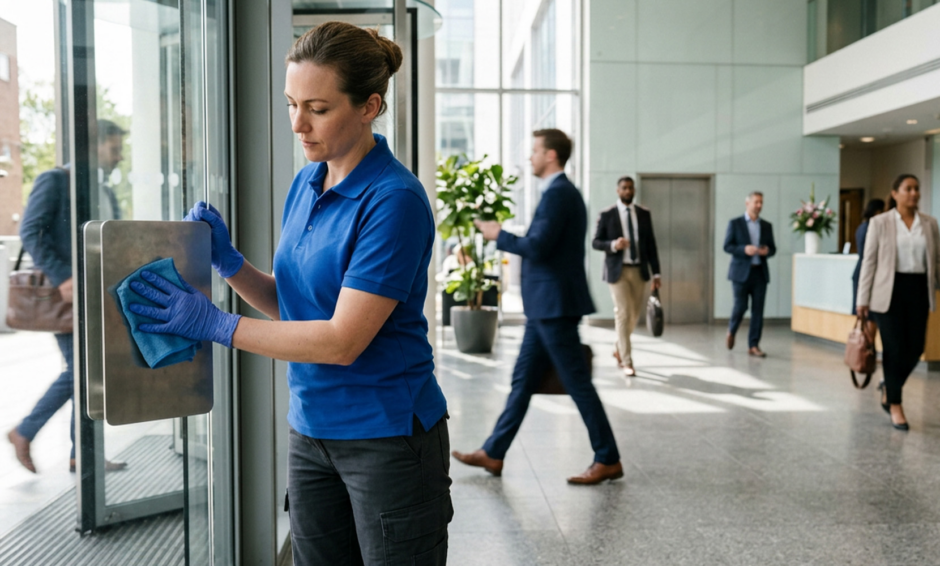
In a busy commercial facility, the same surfaces can be touched hundreds of times in a single day. Door handles, elevator buttons, restroom fixtures, shared equipment, breakroom counters, and reception areas are subject to constant use, especially in offices, schools, healthcare-adjacent spaces, warehouses, and other high-traffic environments.
That raises an important question for facility managers: How often should high-traffic commercial spaces be cleaned and disinfected?
There isn’t one schedule that works for every building. The right commercial cleaning frequency depends on how the facility is used, how many people move through it, which surfaces are most often shared, and whether seasonal illness or other circumstances call for additional attention.
A thoughtful workplace disinfection plan should account for those differences rather than treating every room and surface the same way.
Cleaning & Disinfecting Aren’t the Same Thing
Before setting a schedule, it helps to distinguish between cleaning and disinfecting. Cleaning removes dirt, debris, and many germs from surfaces using soap, detergent, and physical cleaning. Disinfecting uses chemicals designed to kill remaining germs on a surface. In most routine situations, the CDC notes that regular cleaning is enough to remove most harmful germs, while disinfection becomes especially important when someone has been sick or when conditions warrant additional precautions.
That distinction matters because a good facility-maintenance plan shouldn’t simply call for disinfectant to be used everywhere, all the time. The more effective approach is to determine which spaces need routine cleaning, which high-touch surfaces need more frequent attention, and when disinfection should be added.
Cleaning should also generally come before disinfection. Dirt and other residue can interfere with a disinfectant’s ability to work effectively, so surfaces should be properly cleaned before a disinfecting product is applied.
How Often Should High-Traffic Areas Be Cleaned?
For most commercial buildings, high-touch surfaces should be cleaned regularly, but “regularly” may mean different things depending on the environment.
A smaller professional office with limited visitors may be well served by routine daily cleaning, while a building with hundreds of employees, customers, patients, students, or vendors moving through common areas may need certain surfaces addressed multiple times throughout the day.
The CDC recommends considering both the type of surface and how frequently it is touched. High-touch surfaces are more likely to accumulate germs, and high-traffic areas may warrant more frequent cleaning or the addition of disinfection.
That means facility managers should think in terms of use, not simply square footage.
A large conference room that sits empty most of the week may require less frequent attention than a small employee breakroom used continuously throughout the day. Likewise, a lightly used hallway and a busy building entrance shouldn’t necessarily be on the same schedule.
Which Areas May Need More Frequent Attention?
Not every surface in a commercial building carries the same level of use. A practical cleaning plan prioritizes the areas that employees, visitors, customers, or occupants interact with most frequently.
Common high-touch areas may include:
- Door handles and push plates
- Elevator buttons
- Stair and hand railings
- Reception counters
- Light switches
- Shared phones and office equipment
- Touchscreens and keypads
- Breakroom counters and appliance handles
- Restroom faucets, dispensers, and fixtures
- Conference-room tables and shared controls
CDC guidance specifically identifies surfaces such as counters, door handles, stair rails, elevator buttons, touchpads, restroom fixtures, and desks as examples of high-touch areas that should be cleaned regularly. The key is identifying which of these surfaces receives the most use in your facility and building the cleaning schedule around them.
Foot Traffic Should Help Determine Commercial Cleaning Frequency
One of the most important factors in determining commercial cleaning frequency is the number of people moving through a space.
Consider two office buildings with similar layouts. One has 20 employees and receives only occasional visitors. The other houses several companies, has a busy lobby, shared elevators, and hundreds of people entering and leaving throughout the day.
Those facilities shouldn’t necessarily follow the same cleaning schedule.
Higher foot traffic typically means more contact with shared surfaces, more debris brought into the building, greater restroom use, and more demand on common areas. Entrances, lobbies, elevators, hallways, cafeterias, and restrooms may therefore require more frequent service than private offices or lightly used rooms. In some facilities, that could mean a daytime porter routinely checking high-use areas in addition to a more comprehensive nightly cleaning program.
Facility Type Matters, Too
The type of facility also plays a major role in determining how often cleaning and disinfection should occur.
Corporate Offices
In an office environment, daily cleaning may address desks, restrooms, breakrooms, common spaces, and floors, while heavily shared surfaces may need additional attention during the workday. Hybrid schedules can make this more complicated. A building may be relatively quiet on certain days but much busier when most employees are onsite. Cleaning schedules should reflect those patterns rather than assuming occupancy is consistent throughout the week.
Warehouses & Industrial Facilities
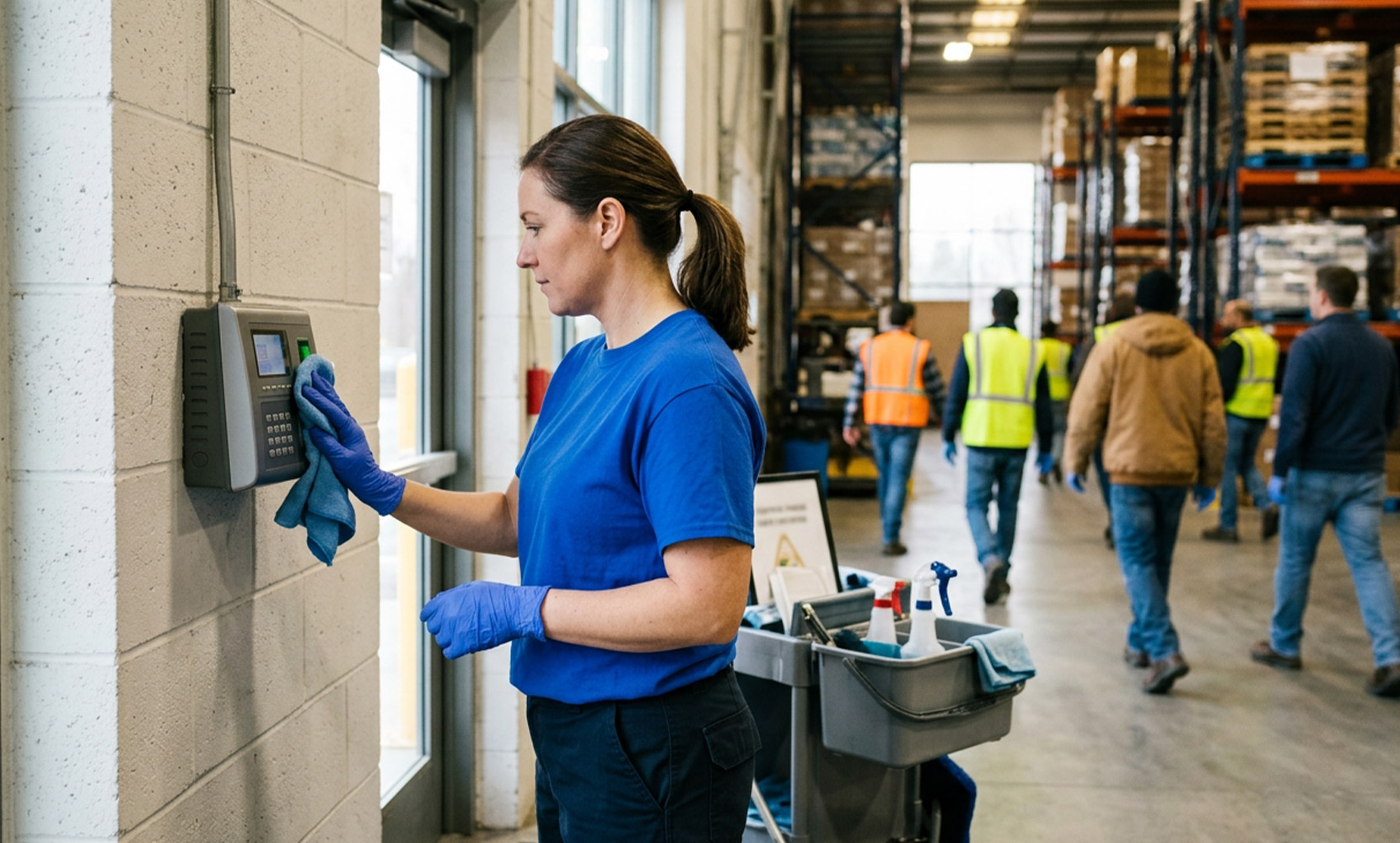
Industrial and warehouse environments may have a different set of priorities. Shared equipment controls, time clocks, break areas, restrooms, locker rooms, office spaces, and entry points can see frequent use even when other parts of the facility don’t require the same level of surface cleaning. Dust, debris, shift changes, and around-the-clock operations may also affect how frequently certain areas need service.
Schools & Other Shared Facilities
Facilities with large numbers of occupants moving between rooms throughout the day may need added attention in common spaces, cafeterias, restrooms, entrances, and other shared areas.
Healthcare & Specialized Environments
Healthcare facilities and certain specialized environments may be subject to specific infection-control practices, regulations, or cleaning protocols that go beyond general commercial recommendations. CDC’s general facility-cleaning guidance specifically notes that healthcare settings and other regulated facilities may have separate requirements. In those environments, the cleaning plan should always reflect the applicable facility standards.
Should Cleaning Increase During Cold & Flu Season?
Seasonal illness can be another reason to reassess a facility’s cleaning schedule. During periods when respiratory illnesses are circulating more heavily, facilities may choose to increase attention to high-touch surfaces and shared spaces. CDC guidance continues to recommend regular cleaning of frequently touched surfaces as part of good workplace hygiene and respiratory illness prevention.
That doesn’t necessarily mean every surface needs constant disinfection. Instead, facility managers might increase the frequency of cleaning in places such as:
- Building entrances
- Breakrooms and cafeterias
- Restrooms
- Shared workstations
- Conference rooms
- Elevators
- Frequently used equipment
If someone has been visibly ill in an area, disinfection may be appropriate after cleaning. During certain disease outbreaks, local public-health authorities may also recommend additional procedures. A professional cleaning plan should be flexible enough to respond when those conditions change.
Why More Disinfectant Isn’t Always Better
It can be tempting to assume that disinfecting more frequently is automatically safer, but that isn’t necessarily the best approach. Disinfectants need to be used according to their labels, including instructions regarding where the product can be used, how it should be applied, and how long the surface must remain wet for the product to work as intended. EPA notes that this required wet period, or contact time, is an important part of proper disinfectant use. Certain materials may also be damaged by repeated exposure to products that aren’t appropriate for the surface.
A targeted approach can therefore be more effective than indiscriminately disinfecting every part of a building. EPA guidance on greener cleaning practices similarly recommends limiting disinfectant use to areas where contact with contaminated surfaces is more likely, such as bathroom fixtures, doorknobs, and other high-touch surfaces, rather than using disinfectants for every general cleaning task.
How to Build the Right Cleaning and Disinfection Schedule
Rather than asking, “How often should we disinfect the building?” it may be more useful to ask, “Which areas need attention, and how often based on how they’re actually used?”
Start by looking at a few key factors:
- Foot traffic: How many people use the space each day, and when are the busiest periods?
- Touch frequency: Which surfaces are repeatedly handled by multiple people?
- Facility type: Does the building include offices, warehouse areas, medical spaces, classrooms, production environments, or other specialized areas?
- Operating hours: Is the facility open eight hours a day, or are multiple shifts using it around the clock?
- Shared spaces: Which areas bring the greatest number of people together?
- Seasonal conditions: Does illness activity or another temporary condition warrant more frequent attention?
- Existing requirements: Are there industry-specific regulations, internal protocols, or manufacturer instructions that affect cleaning or disinfection?
Once those factors are understood, the schedule can be divided into tasks that may need to happen throughout the day, daily, several times per week, or on a more periodic basis. That’s much more useful than applying the same cleaning frequency to every part of the building.
A Customized Plan Can Help Maintain the Right Frequency
High-traffic commercial spaces need consistent attention, but consistency doesn’t mean every surface has to be treated the same way. The right plan prioritizes high-touch areas, adjusts to actual building usage, accounts for facility-specific requirements, and can increase or decrease service as conditions change.
Commercial Cleaning Corporation works with organizations to develop cleaning programs around each facility’s operating hours, traffic patterns, building type, and service priorities. Depending on the property, that may include routine nightly cleaning, daytime porter support, high-touch surface cleaning, restroom care, floor maintenance, and additional disinfection when appropriate. A customized approach can help facility managers maintain a clean, professional environment without relying on a one-size-fits-all schedule.
Build a Cleaning Schedule Around Your Facility
There’s no single answer to how often every high-traffic commercial space should be disinfected. A busy lobby may need attention several times during the day, while a lightly used office may not. Shared surfaces may require more frequent cleaning than floors or walls, and seasonal illness or an identified sickness event may warrant additional disinfection.
The most effective workplace disinfection and cleaning plan is one built around the way your facility actually operates. Commercial Cleaning Corporation can evaluate your building, identify high-traffic and high-touch areas, and develop a cleaning schedule that aligns with your facility’s needs.
Are your high-traffic areas getting the attention they need? Contact Commercial Cleaning Corporation to discuss a cleaning plan built around your facility, schedule, and traffic patterns.