Flu season can create added challenges for nearly every type of commercial facility. As respiratory illness becomes more common in the fall and winter, organizations may see higher absenteeism, greater concern around shared spaces, and more pressure on facility teams to maintain clean, well-stocked environments.
That’s why flu season preparation should begin before cases start to rise. By taking the right steps to prepare for flu season, facility managers can strengthen cleaning protocols, review high-touch areas, confirm supply levels, and coordinate with building teams in advance.
Early preparation can’t eliminate illness, but it can help facilities respond more consistently and maintain a cleaner, healthier environment throughout the season.
Review Your Cleaning Program Before Flu Season Peaks
Routine cleaning provides the foundation for flu-season preparation. Before illness becomes more widespread, facility managers should review current cleaning schedules and determine whether they still reflect how the building is being used.
That review should include factors such as:
-
Cleaning frequency
-
Staffing levels
-
Restroom service
-
Common-area cleaning
-
High-touch surface procedures
-
Whether certain areas may benefit from daytime attention in addition to after-hours service
Building usage can change significantly over time. More employees may be working on-site, common areas may be busier, or new shared spaces may have been added. The goal isn’t necessarily to increase cleaning everywhere. Instead, facility managers should identify where additional attention may have the greatest impact.
A heavily used break room, for example, may require more frequent service than a conference room that’s used only occasionally. Reviewing the cleaning plan before flu activity increases gives facility teams time to make proactive adjustments.
Identify High-Traffic Areas
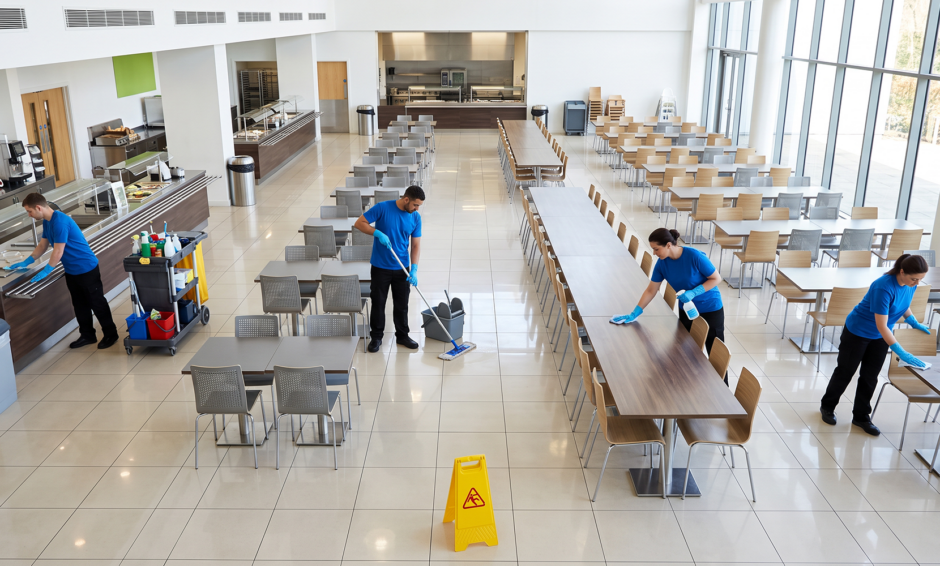
Not every part of a facility experiences the same level of use. High-traffic spaces bring more people into shared environments and can place greater demands on cleaning teams throughout the day.
Depending on the facility, priority areas may include:
- Entrances and reception areas
- Restrooms
- Break rooms and cafeterias
- Elevators and stairwells
- Conference rooms and shared workspaces
- Locker rooms and waiting areas
The priorities will vary by building type. A corporate office may focus on kitchens, conference rooms, shared desks, and elevators, while a manufacturing facility may need greater attention in locker rooms, time-clock areas, and employee break spaces.
Understanding how people actually move through the building helps facility teams focus cleaning resources where they’re most needed, rather than relying on a one-size-fits-all schedule.
Pay Attention to High-Touch Surfaces
High-touch surfaces are another important part of flu-season planning. Door handles, light switches, elevator buttons, handrails, faucet handles, shared phones, keyboards, touchscreens, appliance handles, and copier controls can all be touched repeatedly throughout the day.
Facility managers should work with their cleaning provider to identify the most frequently used surfaces in their specific building. Some are obvious, but others may be easy to overlook, particularly in back-of-house areas, shared equipment rooms, and production spaces.
Cleaning frequency should reflect actual usage. A surface touched dozens of times an hour may require more attention than one that’s used only a few times each day. Taking the time to identify these touchpoints in advance also helps cleaning teams work more consistently and reduces the chance that frequently used surfaces will be missed during routine service.
Know When to Clean & When to Disinfect
Cleaning and disinfecting are related, but they serve different purposes. Cleaning removes dirt, debris, and many germs from surfaces, while disinfection uses products formulated to kill certain germs that remain after cleaning.
Both can play a role in a flu-season strategy, but they should be used appropriately. Facility teams should have clear procedures for when routine cleaning is sufficient and when disinfection may be appropriate, particularly on frequently touched surfaces or during periods of increased illness.
Proper product use is just as important as frequency. Cleaning personnel should understand manufacturer instructions, including:
- Dilution requirements
- Required contact or dwell time
- Surface compatibility
- Ventilation needs
- Personal protective equipment
Using more disinfectant doesn’t necessarily provide better results. Consistent application and proper technique matter more.
Give Restrooms & Shared Spaces Extra Attention
Restrooms, break rooms, and shared kitchens can become especially challenging during flu season because they combine heavy traffic with frequent contact with shared surfaces.
Restrooms should be inspected regularly to ensure they’re clean and fully stocked with essentials such as hand soap, paper towels, toilet tissue, and other hygiene supplies. In high-use facilities, a single cleaning each day may not be enough to maintain conditions through the afternoon.
Shared kitchens and break rooms deserve similar attention. Refrigerator handles, microwave buttons, coffee machines, sink fixtures, countertops, vending machines, and tables may all be used repeatedly throughout the day. These spaces can also accumulate spills, trash, and clutter quickly, so cleaning schedules should reflect how heavily they’re actually used, particularly in larger facilities or workplaces with staggered shifts.
Stock Hygiene & Cleaning Supplies Early
Running short on basic supplies during flu season can make it much harder to maintain consistent cleaning and hygiene standards. Before demand increases, facility managers should review inventory levels and reorder points for the items their teams use most often.
That may include:
- Soap and hand sanitizer
- Paper towels and tissues
- Cleaning chemicals and disinfectants
- Disposable wipes and gloves
- Trash liners and other janitorial supplies
Facilities with multiple buildings may also want to confirm that supplies are distributed appropriately across locations. Keeping a reasonable reserve of essential items can help prevent disruptions if usage rises unexpectedly or deliveries are delayed.
Include Indoor Air Quality in Your Planning
Surface cleaning is only one part of maintaining a healthier indoor environment. Respiratory viruses can also spread through the air, which makes indoor air quality another important consideration during flu season.
Facility managers should work with qualified HVAC or building professionals to review ventilation, filtration, maintenance schedules, airflow, and other factors that may affect indoor air quality. The right approach depends on the facility and its existing systems. An older office building may have very different capabilities from those of a newer property, warehouse, school, or healthcare environment.
The important thing is to include indoor air quality in the broader flu-season strategy rather than relying on surface cleaning alone.
Reinforce Everyday Preventive Practices
Facility teams are only one part of maintaining a healthier workplace. Building occupants also play a role, and employers and property managers can reinforce simple practices such as regular handwashing, using hand sanitizer when soap and water aren’t available, covering coughs and sneezes, and, when possible, staying home when sick.
Signs in restrooms, break rooms, entrances, and other common areas can help keep those reminders visible throughout the season. Facilities should also ensure handwashing stations remain clean, stocked, and easy to use. Communication is most effective when the environment supports the behaviors being encouraged.
Have a Plan for Increased Illness
Even with strong preparation, facilities should be ready for periods when illness levels increase. Creating a response plan in advance can help reduce confusion later and make it easier to adjust service levels when needed.
Before the season is underway, facility managers should determine:
- Who can authorize additional cleaning
- Which areas would receive priority
- How quickly service levels can be adjusted
- Whether additional staffing is available
- How facility teams and cleaning providers will communicate
For some facilities, the response may involve more frequent attention to high-touch surfaces. For others, it could mean adding daytime cleaning, increasing restroom service, or focusing additional resources on specific departments.
Coordinate With Your Commercial Cleaning Provider
Flu-season planning is also a good opportunity to review expectations with your commercial cleaning provider. A provider can help identify areas that may need additional attention and determine whether current service levels still match building occupancy and usage.
That conversation may include reviewing high-touch areas, cleaning frequencies, product use, restroom service, daytime cleaning needs, and how quickly the scope of work can be adjusted if illness increases.
Having these discussions early makes it easier for facility managers and cleaning teams to respond consistently throughout the season rather than making changes on the fly.
A Proactive Approach to Flu Season
Flu-season readiness doesn’t require completely changing a facility’s cleaning program. In many cases, it means reviewing and strengthening the systems already in place.
That includes identifying high-traffic and high-touch areas, confirming cleaning and disinfecting procedures, checking supply inventories, supporting hand hygiene, considering indoor air quality, and creating a response plan before illness levels rise. The earlier these steps are taken, the better prepared facility teams can be for the added demands of fall and winter.
Commercial Cleaning Corporation works with commercial, industrial, educational, healthcare, and other facilities throughout the Mid-Atlantic to develop cleaning programs tailored to each building’s needs. From routine janitorial services to specialized cleaning and disinfection support, our team can help you prepare for flu season while maintaining a clean, professional environment year-round.
Is your facility ready for flu season? Contact Commercial Cleaning Corporation to discuss a cleaning program built around your facility, schedule, and operational needs.