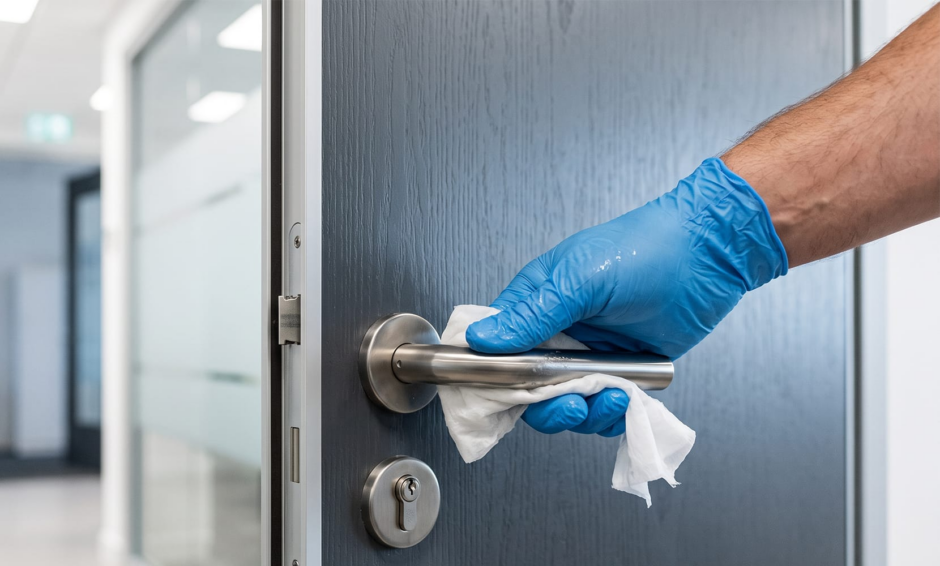
As temperatures cool and daily activity shifts indoors, fall changes how commercial spaces are used. Offices get busier, schools settle into routines, and shared spaces see continuous traffic. Paired with the arrival of cold and flu season, fall is the ideal time to evaluate how your facility handles high-touch surfaces.
While floors and restrooms are standard cleaning priorities, high-contact points deserve extra focus because they are handled continuously throughout the day. Prioritizing these surfaces within your routine maintenance schedule helps reduce contamination risks and maintains a healthier environment for employees, students, and visitors.
Partnering with professional commercial cleaning services allows facility managers to identify high-contact zones and seamlessly integrate them into a consistent cleaning plan.
The Seasonal Challenge: Why High-Touch Surface Cleaning Demands Extra Focus in the Fall
In any active facility, high-contact points serve as primary hubs of human activity. A single main entrance handle, keypad, or shared printer panel can be touched hundreds or even thousands of times between morning arrival and evening departure. During the fall, three key factors elevate the risk associated with these shared surfaces:
Increased Indoor Traffic Density
Cooler weather ends outdoor breaks and open-window ventilation. Employees, contractors, and visitors spend virtually all of their time inside, increasing the frequency of contact with interior doors, stairwells, and shared amenities.
Seasonal Pathogen Spikes
Fall marks the official start of cold, flu, and respiratory virus season. Pathogens can survive on hard, non-porous surfaces—such as metal handles, plastic keypads, and laminate countertops—for hours or even days if left unaddressed.
Closed HVAC Environments
When heating systems turn on for the season, buildings rely heavily on recirculated air. While air filtration systems handle airborne particles, physical touchpoints remain the primary vector for surface-to-hand pathogen transfer.
Relying on a static, year-round cleaning schedule often leaves facilities vulnerable during these high-risk months. A modern, proactive cleaning strategy must adapt dynamically to seasonal spikes in occupancy and environmental exposure.
What Counts as a High-Touch Surface?
Some high-contact points are obvious, while other places are easily missed because they are small, integrated into electronics, or located in transition zones.
Because traffic patterns vary across offices, schools, industrial sites, and healthcare environments, a tailored program starts by mapping out the primary touchpoints across your facility:
- Doors & Entrances: Main entrance handles, push plates, vestibule doors, interior access doors, badge readers, keypads, intercom buttons, and security panels.
- Lighting & Wall Controls: Light switches, thermostat controls, alarm keypads, room scheduling monitors, and wall-mounted touchscreens.
- Transition Zones: Elevator call buttons, interior control panels, stairwell handrails, and entry turnstiles.
- Workstations & Common Desks: Shared desks, reception counters, conference room tables, hot-desking setups, keyboards, mice, and desk phones.
- Shared Technology & Equipment: Copiers, printers, touchscreens, tablets, vending machines, check-in kiosks, and time clocks.
- Restroom Fixtures: Faucet handles, flush valves, stall locks, soap and towel dispensers, hand dryer buttons, and counters.
- Break Rooms & Cafeterias: Refrigerator handles, microwave keypads, coffee machines, cabinet pulls, water dispensers, and seating areas.
- Industrial & Manufacturing Zones: Machine interfaces, equipment control panels, shared tools, forklift controls, safety railings, and locker rooms.
How Often Should High-Touch Surfaces Be Cleaned?
A common misconception is that every high-touch surface requires continuous, non-stop disinfection. In practice, over-saturating surfaces can damage materials, waste resources, and disrupt daily business operations. Instead, cleaning frequencies should be calibrated according to real-world usage patterns:
- High-Frequency Zones (Multiple Times Daily): Main entrance doors, lobby elevator buttons, primary restroom fixtures, and central break room appliances experience near-constant contact. These areas benefit from midday touch-ups alongside regular after-hours service.
- Medium-Frequency Zones (Daily): Conference room tables, shared workstations, copier panels, and stair railings should be thoroughly cleaned at the close of every business day.
- Low-Frequency Zones (Weekly or Bi-Weekly): Individual, dedicated employee desks, low-traffic storage room doors, and secondary equipment panels require consistent maintenance but lower daily intervention.
By aligning cleaning cycles with occupant density and peak usage hours (such as immediately following morning arrival or afternoon lunch shifts), facilities maximize hygiene impact without unnecessary expenditure.
The Technical Difference: Cleaning vs. Disinfecting
Understanding the difference between cleaning and disinfecting is critical for safe, effective surface maintenance. While cleaning uses detergent and water to remove dirt, dust, and organic matter from surfaces, disinfecting uses specialized chemical products to destroy microorganisms. Put simply, cleaning prepares the surface for treatment, and disinfecting requires proper “dwell” or contact time to kill germs.
- Cleaning Comes First: Applying a disinfectant directly onto a dirty or dusty surface severely limits its effectiveness. Physical dirt acts as a barrier, protecting microorganisms from chemical exposure. Thorough cleaning must always precede disinfection.
- Respecting “Dwell Time”: Disinfectants do not kill germs instantly upon contact. Every EPA-registered disinfectant requires a specific “dwell time”—the amount of time the wet solution must remain undisturbed on the surface (typically anywhere from 30 seconds to 10 minutes) to eliminate targeted pathogens.
- Material Compatibility: Using harsh chemicals on sensitive equipment like touchscreens, control panels, or specialized industrial finishes can cause clouding, electrical shorts, or material corrosion.
Professional cleaning technicians are trained to select surface-safe, EPA-registered products and apply them strictly according to manufacturer instructions.
Conducting a Fall Facility High-Touch Audit
Fall is a good time to review whether your current cleaning plan addresses the right surfaces. Before making adjustments to your current cleaning scope, perform a physical walkthrough of your building during active working hours. Asking these target questions will help expose overlooked gaps:
- The First Touch Test: What is the very first physical object an employee or guest touches upon arriving at your property? (e.g., exterior gate latch, parking garage elevator button, main glass door handle).
- Congregation Points: Where do people naturally gather, line up, or wait during peak shift transitions or lunch hours?
- Cross-Department Vectors: Which rooms, devices, or amenities are shared across different shifts or departments rather than assigned to a single person?
- Digital & Electronic Interfaces: Are keypads, touchscreens, time clocks, and control panels explicitly listed on your cleaning provider’s Scope of Work, or are they being bypassed during standard walkthroughs?
How Commercial Cleaning Services Drive Operational Value
Managing high-touch surface hygiene in-house often places an unsustainable burden on administrative personnel or facility managers who lack specialized equipment and commercial-grade supplies. Partnering with expert commercial cleaning services provides key operational advantages:
- Customized Scope of Work: Professional providers design tailored checklists tailored specifically to your facility type—whether office, school, industrial plant, or medical facility.
- Trained Technical Personnel: Professional cleaners understand proper chemical dilution, dwell times, color-coded microfiber practices (to prevent cross-contamination between restrooms and break rooms), and safe handling of sensitive electronics.
- Consistent Quality Assurance: Experienced commercial cleaners utilize supervisor audits, digital task-tracking, and scheduled reviews to ensure no touchpoint falls through the cracks as seasonal needs evolve.
Prepare Your Building for the Season Ahead
A proactive approach to high-touch surface cleaning can help support a cleaner, healthier environment and keep facility maintenance consistent throughout the fall and winter months.
Commercial Cleaning Corporation provides customized commercial cleaning services tailored to the unique operational demands of your facility.
Contact Commercial Cleaning Corporation today to schedule a facility evaluation and learn how a custom-designed cleaning program can keep your space healthy, compliant, and prepared this fall.