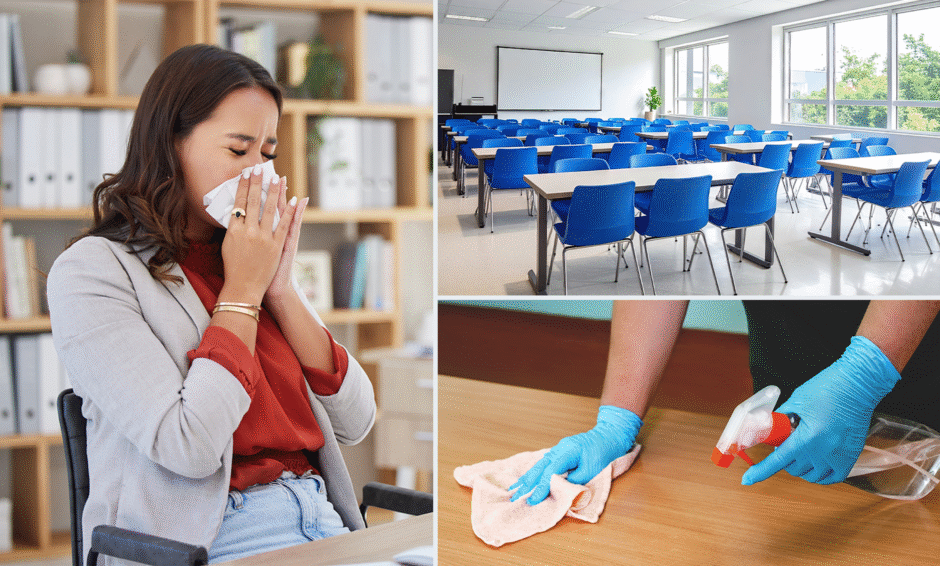
March is here, and most K–12 schools and university campuses have already weathered the toughest stretch of the academic year. Winter illnesses have cycled through classrooms and residence halls, foot traffic has steadily worn down floors and entryways, and custodial teams and school janitorial services staff may have faced gaps due to absences. At the same time, the first signs of spring begin to appear. Fluctuating temperatures, increased moisture, and early allergens entering buildings through every open door.
For facility managers and operations leaders, March isn’t simply a bridge between seasons but a whole operational shift. It’s the time to size up what the winter months left behind, reinforce cleaning and disinfection standards, and prepare buildings for the increased activity and environmental changes that come with spring. A proactive reset now protects health, preserves building assets, and reinforces confidence among students, faculty, parents, and stakeholders.
Strengthen school cleaning protocols this month by reassessing winter wear, reinforcing health standards, and preparing facilities for spring allergens, moisture, and activity.
Reassessing Cleaning & Disinfection After Peak Illness Season
Even though the height of flu season may be behind you, now isn’t the time to scale back your school cleaning and janitorial services program. Illness-related absences among students and staff often disrupt not only instruction but also custodial consistency. Even well-run in-house teams can experience temporary gaps in coverage, which leads to deferred tasks or compressed schedules. A structured review makes sure nothing critical has been overlooked in your broader commercial cleaning strategy for educational facilities.
Step 1: Reevaluate Disinfecting Schedules
Start by reviewing the disinfecting schedules implemented during peak illness months. Confirm that high-touch surfaces are still being cleaned at appropriate frequencies and that any temporary adjustments made during outbreak periods have been formally documented and standardized across all buildings. This evaluation keeps your protocols aligned with CDC-informed best practices without overextending your team. The objective is to sustain strong preventive measures while transitioning from reactive response to consistent, manageable routines within your school janitorial services plan.
Step 2: Conduct a High-Touch Surface Audit
Next, perform a structured audit of high-contact areas around your facility. Door handles, push plates, stair railings, elevator buttons, cafeteria tables, classroom desktops, athletic equipment, and restroom fixtures see constant use throughout winter. A systematic walkthrough verifies not only that these surfaces are being cleaned, but that the correct products and dwell times are being used. Consistent auditing strengthens accountability and reduces the risk of overlooked contamination points in your overall educational facility cleaning program.
Step 3: Strengthen Touchpoint Tracking & Documentation
Touchpoint tracking provides the operational visibility to stay consistent across teams and buildings. Whether managed through digital systems or structured cleaning logs, documentation clarifies when key areas were serviced and by whom. On larger campuses, particularly universities with residence halls and shared facilities, this recordkeeping supports compliance efforts, risk mitigation, and leadership reporting. Clear tracking also reinforces confidence that commercial cleaning standards are being upheld uniformly across departments.
Step 4: Reinforce Training & Protocol Consistency
Use this review period to reinforce training and confirm product knowledge among custodial staff. Experienced teams also benefit from periodic reminders about surface compatibility, proper disinfectant application, and updated procedural expectations. A brief refresher helps prevent small inconsistencies from becoming larger compliance concerns. Doing this means facility managers can make sure cleaning protocols are both effective and sustainable as the campus transitions into spring, whether handled internally or supported by a professional commercial cleaning provider.
Mid-Year Wear, Staffing Challenges & Facility Fatigue
March reveals the cumulative impact of months of continuous occupancy. By now, entryways show signs of salt and de-icing residue. Carpets near main corridors are visibly compressed. Restrooms have endured sustained traffic. Even with diligent cleaning, the simple volume of daily use begins to show.
At the same time, faculty and students often feel mid-year fatigue. Academic pressure, seasonal illness, and long winter months can lower morale across campus. The condition of the physical environment plays a larger role in that morale than many institutions realize. Clean, well-maintained spaces contribute to a sense of order and care, but neglected surfaces subtly communicate the opposite.
For in-house maintenance teams, this is also a period when staffing consistency may have been tested. Illness-related absences among custodial staff can interrupt routines, forcing teams to prioritize urgent tasks while deferring deep cleaning or detailed work. March is the best time to rebalance workloads, reinforce expectations, and, when necessary, bring in supplemental support from a commercial cleaning company specializing in school cleaning services to restore standards.
A structured mid-year reset can focus on:
- Reconfirming daily and weekly task assignments to ensure equitable coverage
- Identifying areas where deferred maintenance may require targeted attention
- Reinforcing training on proper disinfectant use and surface compatibility
- Evaluating whether additional temporary staffing is needed before spring break
Position cleaning as a strategic initiative rather than a reactive function so leadership understands its broader impact. A visibly well-maintained facility supports staff retention and satisfaction, strengthens institutional reputation, and safeguards health compliance. For private schools and universities competing for enrollment, the physical environment directly influences how families and prospective students perceive the institution’s professionalism and standards.
Proactively Addressing Allergens & Indoor Air Quality
As temperatures fluctuate between cold mornings and warmer afternoons (and in the Mid-Atlantic region, we’re also seeing a whiplash of 60-degree days and then suddenly more snow!), allergy season begins to surface. Pollen levels rise gradually, and buildings become a primary line of defense against outdoor irritants. Without proper dust control and ventilation maintenance, allergens that enter through doors and windows can circulate throughout classrooms and common areas.
Dust control should move to the forefront of March cleaning strategies. High-dusting of vents, light fixtures, and elevated surfaces removes accumulated debris before increased airflow redistributes it. Routine wiping of horizontal surfaces, including shelving and windowsills, reduces the buildup that factors into poor indoor air quality and strengthens your educational facility commercial cleaning efforts.
Vent cleaning and HVAC attention are critical components of this effort. Full mechanical servicing may fall under a different department, but custodial teams still play a role in keeping vent covers, returns, and accessible ductwork free of dust. Clean vents support system efficiency and reduce the recirculation of irritants throughout classrooms and offices.
Entry mat systems are another overlooked but highly effective tool in allergen control. Properly sized and well-maintained mats capture pollen, dirt, and moisture before they reach interior floors. Regular cleaning and rotation of those mats lets them continue performing effectively rather than becoming secondary sources of contamination, a key detail in professional commercial cleaning for schools.
Carpet extraction timing also matters. Addressing carpets before pollen levels peak helps remove embedded debris that can aggravate respiratory sensitivities. Combined with consistent classroom surface sanitization, these measures help prevent allergens from becoming indoor irritants that affect comfort and concentration.
Indoor air quality ties directly to attendance rates and productivity. When students and staff experience fewer allergy-related symptoms, absenteeism decreases and classroom focus improves. Parents notice when their children are comfortable and healthy in school environments, reinforcing confidence in the institution’s commitment to care and safety.
Strengthening Cleaning as a Strategic Asset for Schools & Universities
For facility managers and institutional leaders, March is a chance to reposition cleaning as something beyond a routine service. It truly is a strategic asset that affects health outcomes, asset preservation, and overall campus experience. A thoughtful post-winter reset demonstrates foresight and operational excellence.
Reviewing protocols, auditing touchpoints, and preparing for seasonal shifts are more than maintenance tasks. Stakeholders expect transparency and accountability in how facilities are managed. So all of these activities really are proactive measures that protect brand reputation and maintain compliance with evolving health expectations.
A comprehensive March review might include:
- Updating documented cleaning schedules to reflect seasonal adjustments
- Conducting walkthrough inspections to identify wear patterns and buildup
- Evaluating custodial staffing levels in anticipation of spring break projects
- Coordinating with leadership on communication about health and cleaning initiatives
When cleaning is visible, consistent, and well-communicated, it becomes a morale booster rather than a background function. Faculty feel supported in their teaching environments. Students experience cleaner, more comfortable classrooms. Administrators gain confidence that compliance standards are being upheld.
As winter gives way to spring, schools and universities should take a proactive approach to get ahead of potential issues rather than reacting to them. By addressing accumulated wear, reinforcing disinfection standards, and preparing for allergens and moisture, your institution can create a healthier environment that supports learning and performance.
And again, March may feel like an in-between month, but from a facilities perspective, it’s a decisive one. What you do now sets the tone for the rest of the academic year and lays the groundwork for successful spring break projects and summer school cleaning plans. A strategic cleaning reset means your campus is safe, professional, and ready for whatever the season brings next.
Need help achieving these goals? Contact us for a walkthrough analysis of your school, college, or university and professional support in proactive cleaning and long-term planning.